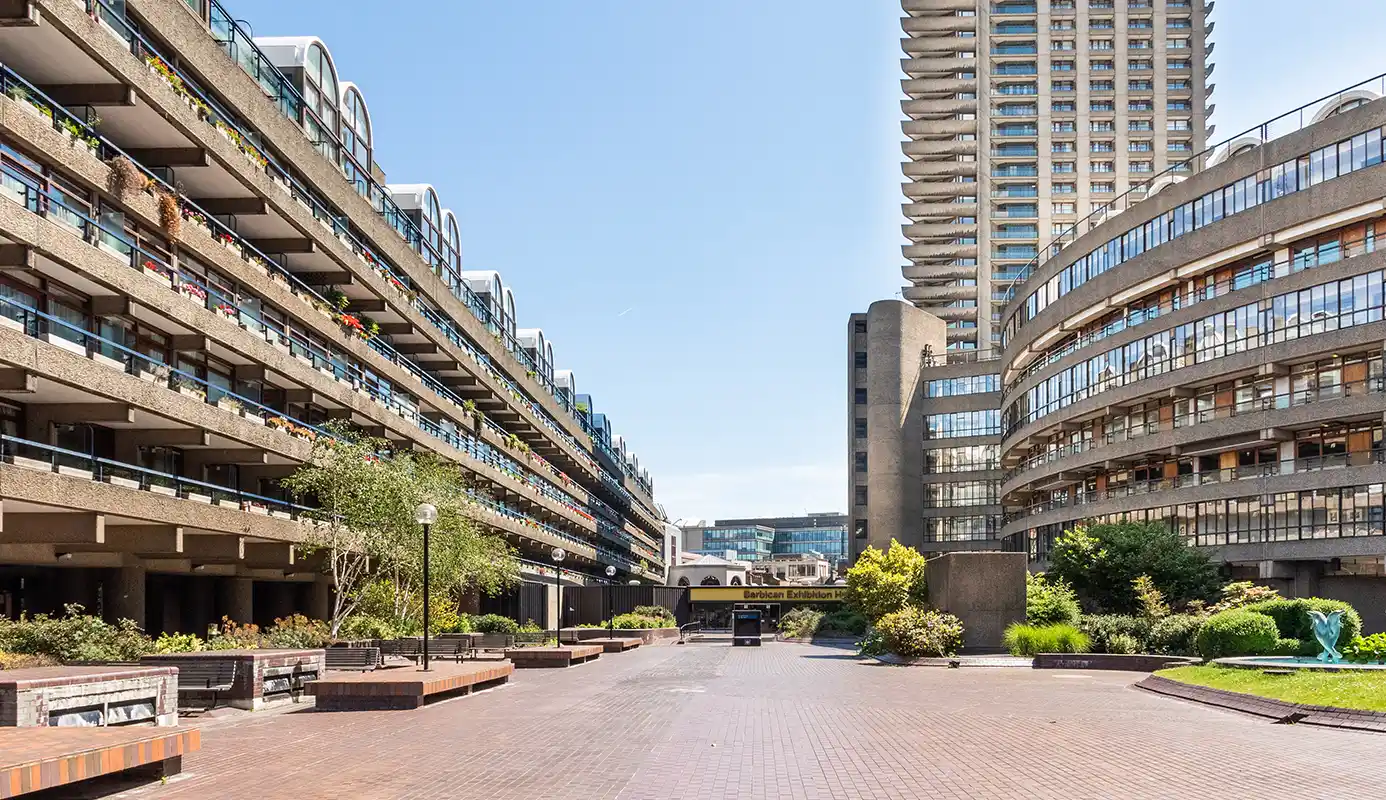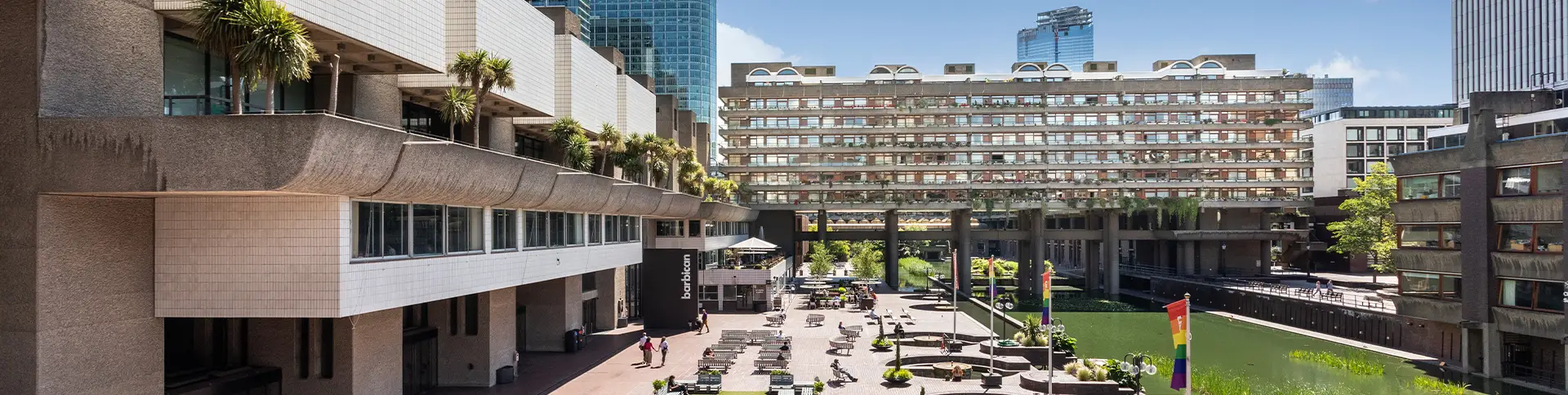
The Barbican Estate, or ‘the Barbican’, is a residential and arts complex built during the 1960s and 1970s in the City of London, predominantly in the historic area of Cripplegate, an area which had been devastated by bombing during the Blitz. It is best known for its concrete brutalist architecture, world-renowned arts centre, its Grade II listing (which it was awarded in 2001) and its elevated pedestrian walkways (or highwalks) which take people away from the bustle of the streets surrounding it. The Barbican’s central London location, proximity to the financial centre of the capital, excellent public transport links, peaceful residents' gardens, terrific amenities and, most importantly, its fantastic flats and houses, offer a quality of life that make it a highly sought after place to live - more than 50 years after its first residents moved in.

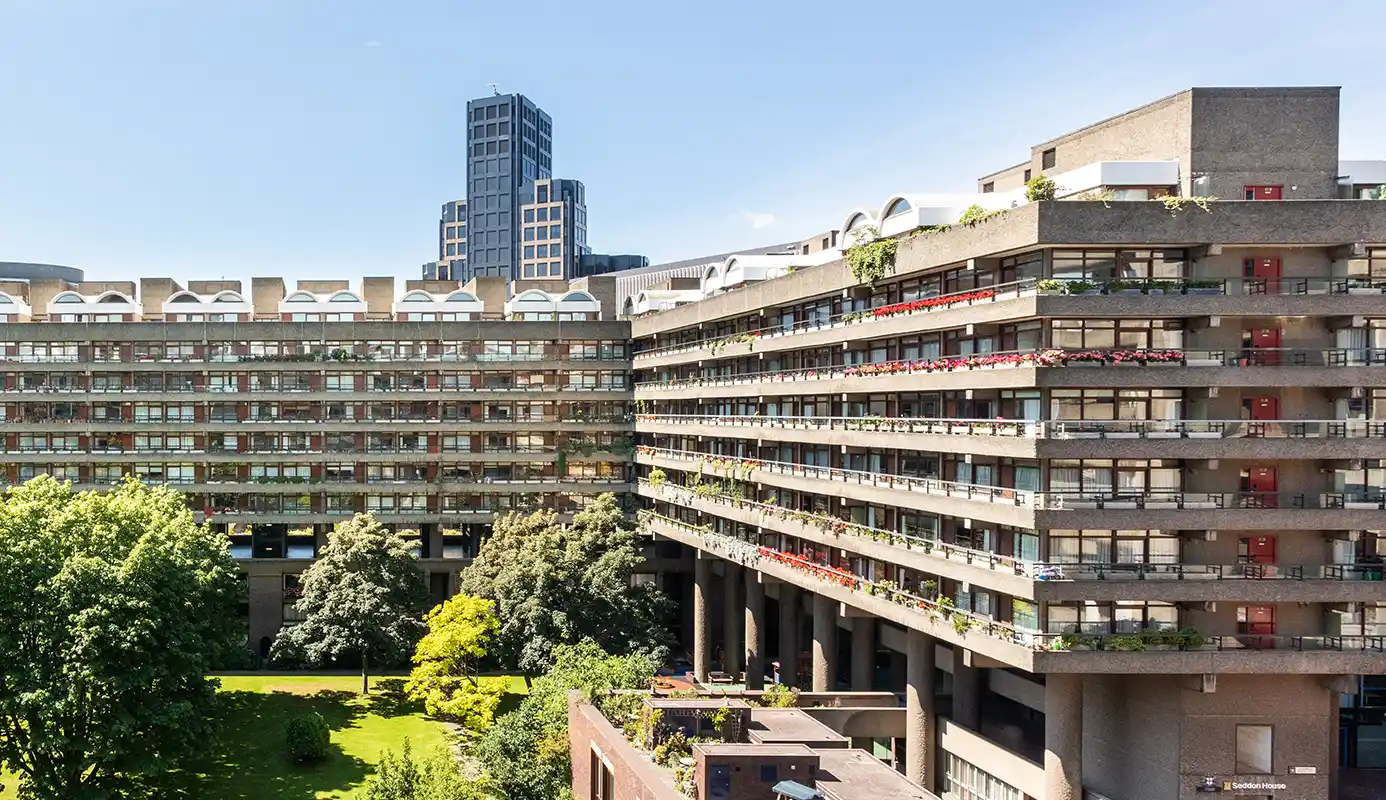
The complex was designed by architects Chamberlin, Powell and Bon, whose first work was the earlier, ground-breaking Golden Lane Estate immediately to the north of Barbican. The residential part of the Barbican Estate was built on a 35 acre site between 1965 and 1976 with the first residents moving in in 1969. The Barbican Arts Centre, in the middle of the Estate, was completed in 1982. There are approximately 2,050 flats with around 50 mews houses and it is home to around 4,000 people.

The residential estate is comprised of thirteen 7-story terraced blocks constructed around gardens and a lake plus three high rise towers and several rows of mews houses. The main entrances to the blocks are all at an elevated 'podium' level which are all connected by a 'highwalk' or 'pedway' system away from any streets which helps keep Barbican life peaceful and isolated from the rush and noise of the surrounding city.

In addition to the residential blocks and towers, which form the substantial part of the Barbican complex, there is the Arts Centre, as mentioned. This is comprised of a main concert hall, theatres, multiple cinema screens, several art galleries, conference rooms and restaurants and a public library. The Barbican complex is also home to the Guildhall School of Music and Drama, the City of London Girls' School, the Museum of London and, finally, the famous Barbican Conservatory, the second largest in London, it houses more than 2000 species of plants and trees.

Please click on the other Barbican tabs for an insight into the different blocks and types flats on offer within the Barbican Estate, an understanding as to why so many people love to call the Barbican their home and other useful information for Barbican residents or those looking to buy or rent through this Barbican estate and letting agency.

Barbican | Flat Types

There are around 2,050 flats in the Barbican Estate with around 50 mews houses. These properties fall into over 80 ‘types’, the references given to the different flat layouts at the time of construction and which are still used today. I provide here an overview of the most common flat types on the Estate. For a more detailed guide to the many flat types I would refer you to Barbican Living which offers a comprehensive and forensic guide to the Barbican, the blocks, the flats and much more.

Flat Type 20

Flat Type 20

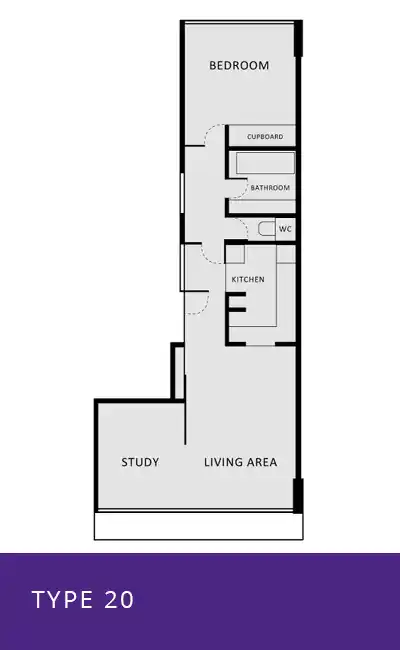
The Type 20 is a large ‘L’ shaped one-bedroom flat which is north-south facing. There are 197 of them and it is the most common flat in the Barbican. The large south facing living area has a sliding partition which allows an area to be closed off. This area was designated as a study in the original plans but some flat owners now use this as a second bedroom. This flexibility is one of the reasons the Type 20 is a very popular flat. The bedroom is at the north end of the flat with the kitchen, toilet and bathroom in the middle. Type 20s are found in Andrewes House, Speed House, Thomas More House and Defoe House which are the east-west terrace blocks all of a similar flat composition.

Flat Type 21

Flat Type 21

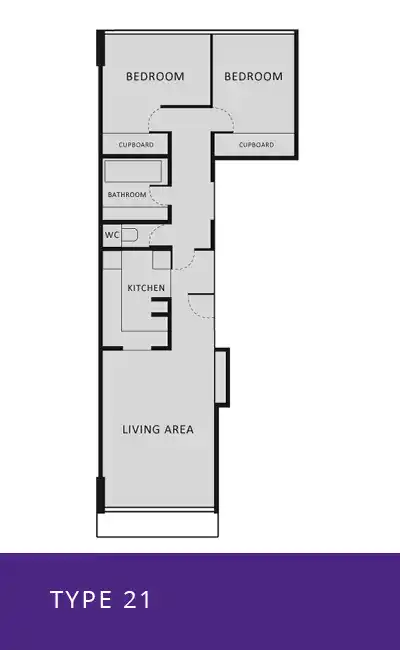
The Type 21 is a two-bedroom flat, of a similar size as the Type 20, and is also north-south facing. There are 186 of them and it is the second most common flat, and the most common two-bedroom flat, in the Barbican Estate. The living area is south facing but is smaller than a Type 20’s. The two double bedrooms are at the north end of the flat with the kitchen, toilet and bathroom in the middle. Type 21s are found in Andrewes House, Speed House, Thomas More House and Defoe House which are the east-west terrace blocks all of a similar flat composition.

Flat Type F1A

Flat Type F1A

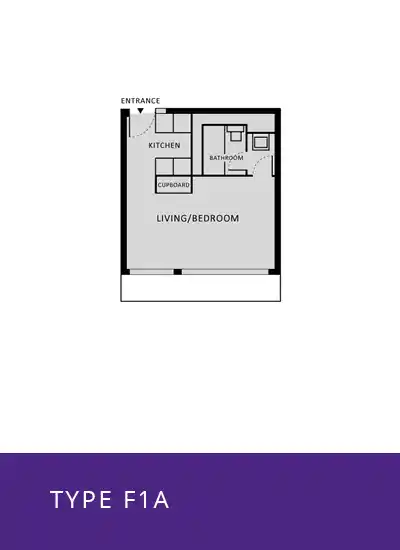
The Type F1A is a studio and is the smallest flat on the Estate. There are 71 of them and they are either east or west facing. They are found in Breton House and John Trundle Court which are short north-south running terrace blocks in the north of the Barbican Estate.

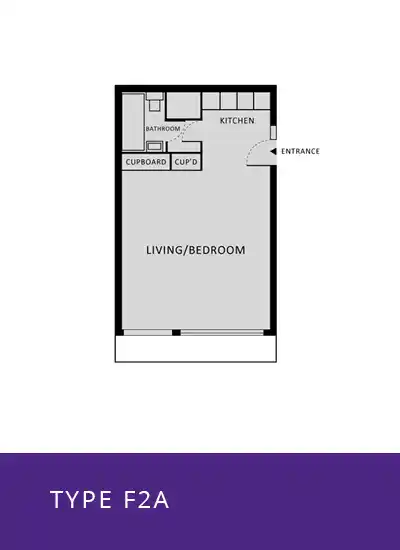
Flat Type F2A

Flat Type F2A

The Type F2A is a large studio flat and they are either east or west facing. There are 140 of them on the Estate making it the third most common type. As with the Type F1A, they are also found in Breton House and John Trundle Court which are short north-south running terrace blocks in the north of the Barbican.

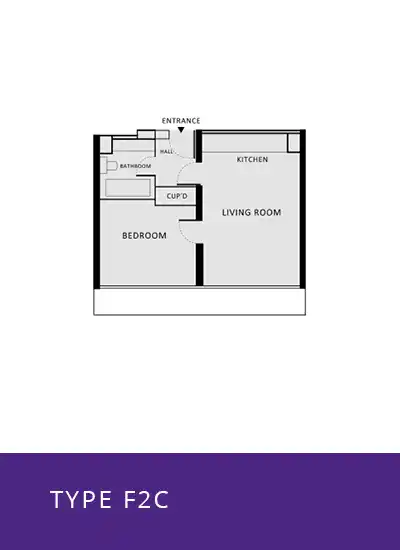
Flat Type F2C

Flat Type F2C

The F2C is a small one-bedroom flat (smaller than a Type F2A studio). They are found in Ben Jonson House, which is a very long east-west terrace block, and Bunyan Court, a short east-west terrace block, both located in the north of the Estate. All of the Type F2Cs are south facing, with both the bedroom and living room having south facing windows. There are 84 of them, making them the fourth most common type of flat in the Barbican.

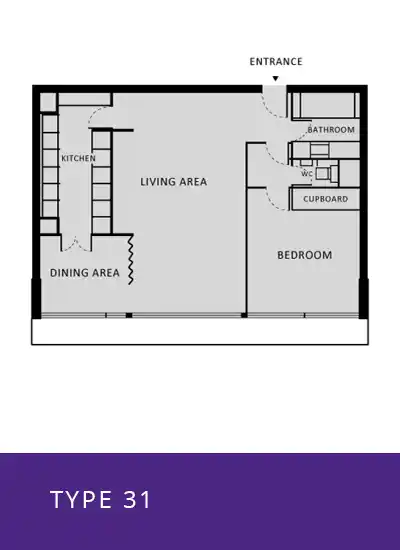
Flat Type 26 and Type 31

Flat Type 26 and Type 31

The Type 26 and Type 31 are large one-bedroom flats. They have an almost identical layout (the positioning of the entrance door seemingly being the only difference) so I include them under the same heading. They are found in and are the standard flat in Gilbert House, Mountjoy House and Seddon House; the short north-south terrace blocks in the south of the Estate. These flats are either east or west facing and lead off a central corridor. There are 42 Type 26s and 63 Type 31s.

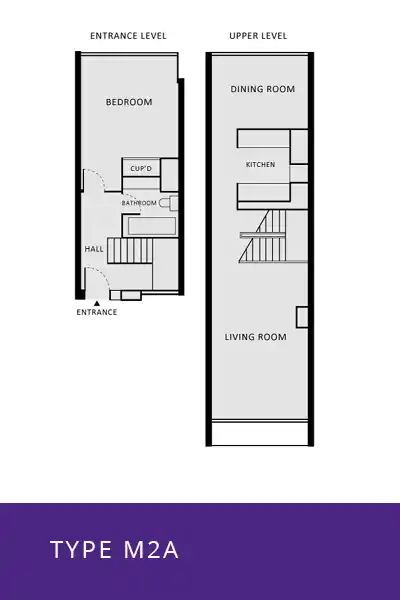
Flat Type M2A and Type M2B

Flat Type M2A and Type M2B

The M2A and M2B are good-sized one-bedroom duplex flats. They are of a very similar layout except the M2B has a slightly smaller bedroom. The bathroom and the north facing bedroom are one level and on the other level is the dining room which is north facing, the living room which is south facing and the kitchen and stairwell in the middle. These flats are found in Ben Jonson House and Bunyan Court, both blocks being in the north of the Barbican Estate and of a similar flat composition. There are 56 Type M2As and 60 Type M2Bs.

Most of the flats on the top floors of Andrewes, Speed, Thomas More and Defoe Houses are a good sized one-bedroom penthouse (albeit smaller than a Type 20) known as a Type 23. This flat has high barrel-vaulted ceilings. Type 23s are north and south facing and there are 64 of them.

Gilbert, Mountjoy and Seddon Houses have Type 35 and Type 36 (almost identical types) large three-bedroom duplex penthouses with a double height living room. These flats are either east or west facing and occupy most of the sixth and seventh floors of these blocks. There are 24 of these types in total.

On the top floors of Breton House and John Trundle Court is found the Type P2A. This is a one-bedroom duplex penthouse with a spiral staircase between the floors. These are either east or west facing and there are 27 of them.

Ben Jonson House and Bunyan Court have Type M3A and M3B (almost identical types although the M3B is marginally shorter) two-bedroom triplex penthouses on their top floors, set over the fifth, sixth and seventh floors. These flats are similar to the Type M2A and M2B but with an extra bedroom on the third (top) floor. There are 28 M3As and 30 M3Bs over the two blocks

tpozooplarightmoveonthemarket